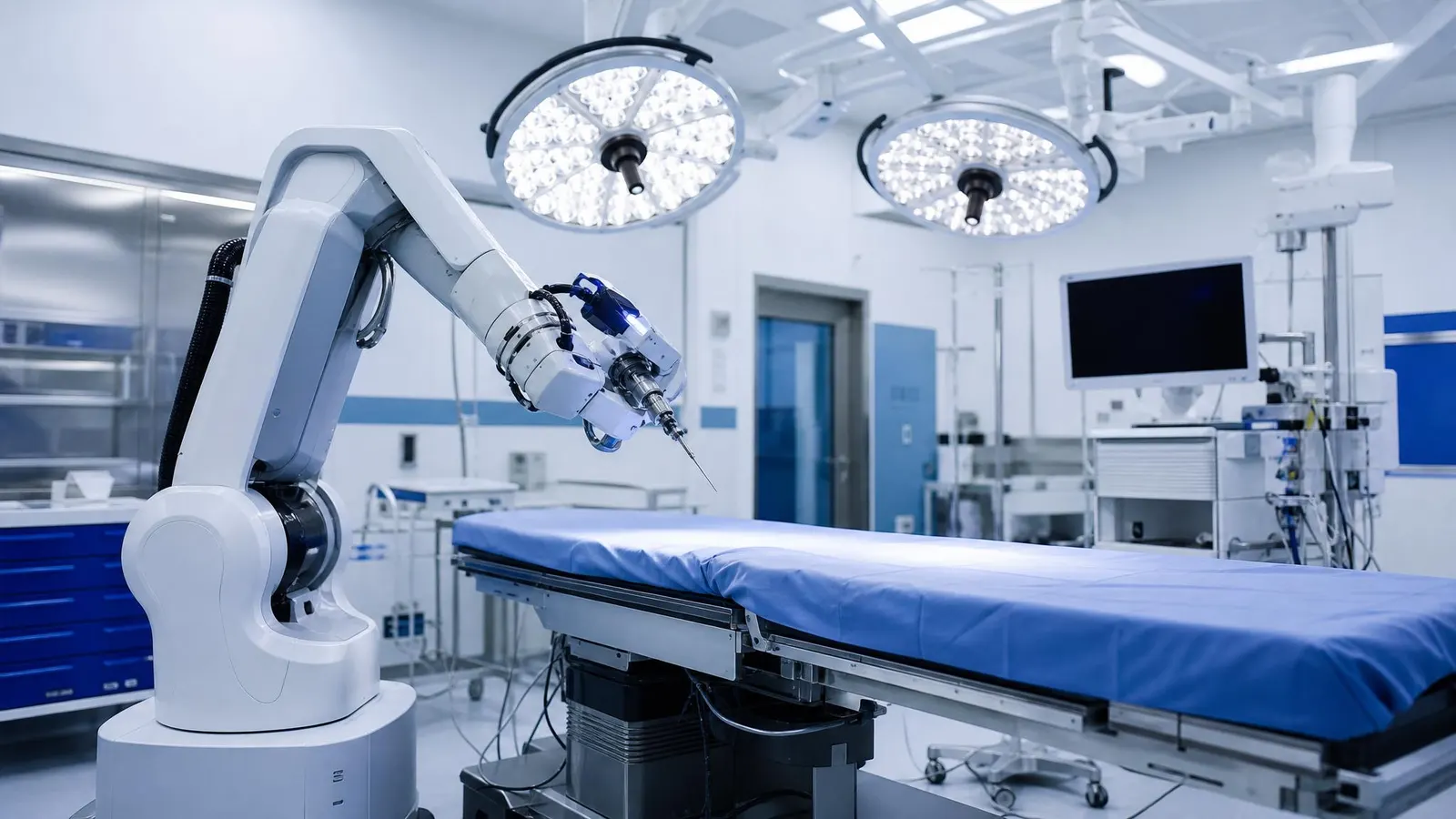
Diligent Robotics' Moxi 2.0 Puts Hospital Robots Back on Practical Ground
Diligent Robotics has opened a new headquarters and launched an upgraded Moxi hospital robot, a reminder that healthcare automation is advancing through logistics first.
Topic hub
Warehouse robots, mobile manipulation, logistics automation, and fulfillment economics.
Diligent Robotics has opened a new headquarters and launched an upgraded Moxi hospital robot, a reminder that healthcare automation is advancing through logistics first.
SoftBank's $200 million Series A investment in Gravis Robotics is a strong signal that construction autonomy is moving from niche pilots toward fleet-scale industrial deployment.
Lattice Semiconductor's robotics interview highlights why sensors, control systems, security, and low-power parallel processing are becoming strategic for autonomous machines.
Serve Robotics' new Grubhub partnership and two-city expansion keep sidewalk delivery robots in the spotlight, but the real test is fleet density and delivery economics.
A laser weeding robot reportedly killing up to 8,000 weeds per minute across farms in 15 countries shows how agricultural robotics is moving beyond pilots.
A U.S. project using robotic construction for 65 3D-printed residences shows how additive building is moving from demo homes toward repeatable housing production.
Robotic stroke rehabilitation systems are becoming more practical as AI-driven therapy, error augmentation, and home-based monitoring converge.
Sydney-founded Alloy Robotics has raised an $8 million seed round for AI agents that help robotics teams diagnose failures across logs, telemetry, video, and engineering context.
NEURA Robotics is acquiring Bosch Rexroth's Active Shuttle autonomous transport system, a sign that mobile robot fleets are becoming part of the broader physical-AI platform race.
Honda is advancing a dexterous robot hand for factory assembly, a reminder that manipulation, not walking, may decide which humanoid and mobile robots become useful at work.
Uber has reportedly sold its remaining Serve Robotics stake, ending a high-profile investor link while leaving the harder question intact: can sidewalk delivery robots scale on their own economics?

A practical guide to mobile manipulator market map with selection criteria, tradeoffs, setup tips, FAQs, and buyer-friendly next steps.

A practical guide to robotics warehouse safety metrics with selection criteria, tradeoffs, setup tips, FAQs, and buyer-friendly next steps.
A new Korea Herald report frames BYD's humanoid robot ambitions as a direct challenge to Hyundai, underscoring how EV makers are becoming serious players in physical AI.
Boston Dynamics' electric Atlas can reportedly change its own battery in under three minutes, shifting attention from humanoid acrobatics to the serviceability needed for real factory work.
DARPA's Lift Challenge is putting unconventional heavy-lift drone designs into real flight tests, pointing toward a future where robotic logistics needs more than quadcopters.
HII plans up to $900 million in shipbuilding work for Path Robotics and GrayMatter Robotics, a major signal that adaptive automation is moving into Navy-grade production.
PIA Automation is building a large BMW E-Drive assembly line with 46 industrial robots, 27 robotic cells, and digital twin commissioning at the Steyr plant in Austria.
Avatar Robotics' $6.5 million seed round is a reminder that the shortest path to useful industrial humanoids may run through teleoperation, not full autonomy.
Avnet and Weston Robot are pairing distribution, edge hardware, and mobile inspection robotics to bring physical AI into factories and industrial sites.
Beijing's deployment of 72 robots across city parks points to a practical direction for service robotics: outdoor maintenance, patrol, and visitor support in harsh weather.
A Japanese contractor's construction robot trials show how physical AI is moving into inspection, progress tracking, and site support before humanoids take over heavy trade work.
Basler's new compact 3D stereo camera system highlights a practical shift in robotics perception: smaller depth sensors for warehouses, mobile robots, and machine-vision deployments.
A former Google DeepMind applied robotics team has emerged from stealth with a worker-trained automation pitch, pointing to a practical route for generalist robots on factory floors.
The German startup is reportedly on track to double revenue this year, a useful signal that AI-enabled industrial robotics is moving from demos into factory budgets.
China Daily reports that cotton-topping robots are moving into fields, a small but telling example of how farm robotics is becoming more task-specific and commercially useful.
Yusen Logistics is reportedly partnering with Destro on an AI-powered human-robot collaboration platform for transload operations, highlighting where warehouse automation is heading next.
Cranswick is using Rockwell Automation pick-and-place robots for high-speed end-of-line packaging, a useful reminder that industrial robotics progress often shows up first in narrow, measurable workflows.
A government robotics committee focused on robotic surgery highlights the next bottleneck in medical robotics: governance, training, access, and procedure-level economics.
Experts are pushing Taiwan to build more robotics software, systems integration, and embodied AI capability around its world-class hardware base.
A new MIT robotics method helps robots plan ahead instead of reacting step by step, a practical advance for mobile manipulation and real-world autonomy.
Tesla reportedly wants robots to clean Cybercabs between rides, a reminder that robotaxis need physical operations automation as much as self-driving software.
FedEx is reportedly moving closer to deploying robots that can load trailers, a sign that logistics automation is pushing deeper into one of the hardest, most injury-prone warehouse workflows.
KUKA's Automation Management Platform deployment at KTPO shows where factory AI is likely to land first: inside existing, highly automated production systems.
The latest FCC robot-policy debate is grabbing headlines, but OSARO's view of warehouse automation points to the deeper issue: reliability, monitoring, and task-specific AI.
A San Francisco company is pitching humanoid robot home cleaning around a $30-an-hour service model. The technical question is less flashy than the business question: will people trust it?
DoorDash is moving further into autonomous delivery with an in-house drone program, a sign that platforms want tighter control over last-mile robotics.
Renault is expanding Exotec's Skypod warehouse robots in France and Germany after cutting spare-parts order processing from two hours to 15 minutes.
ABM and LaGuardia Gateway Partners have launched an autonomous robotics pilot at Terminal B, putting airport guest experience at the center of service robot adoption.
Automated parking robots are being pitched for New York luxury buildings, showing how real estate may become an early proving ground for service robotics.
A Chinese firm's reported plan to deploy 2,000 humanoid robots in textile production highlights why apparel and light manufacturing are becoming important test beds for embodied AI.
The U.S. Naval Research Laboratory's space robotics pipeline highlights a growing push toward autonomous systems that can inspect, assemble, and service spacecraft in orbit.
LPP Logistics is deploying 948 Hai Robotics systems for e-commerce fulfillment in Southeastern Europe, showing how practical warehouse robots keep scaling while humanoids dominate headlines.
U.S. Navy shipbuilders are expanding robotics for construction and maintenance work, showing how automation is moving into difficult industrial environments beyond ordinary factory floors.

A practical guide to warehouse robot orchestration software with selection criteria, tradeoffs, setup tips, FAQs, and buyer-friendly next steps.
Foundation Future Industries says its next Phantom humanoid robots will use AMD's Ryzen AI Embedded X100 processors and FPGA technology, opening a new front in the robot compute race.
UK robot maker Humanoid has raised $152 million at a $1.35 billion post-money valuation, giving Europe a pure-play humanoid robotics unicorn as the industrial robot race heats up.
Korean Register, Hyundai Motor, and Kia are piloting MobED aboard the HYUNDAI DUBAI, showing how compact autonomous mobile robots could move from show-floor demos into maritime operations.
As robots gain more autonomy, connectivity, and AI decision-making, industrial cyber risk is moving from IT screens into physical operations.
A reported $1.7 billion a16z-led round shows how aggressively investors are funding robotics platforms that connect software, labor, and physical operations.
A robot manicure service has arrived in Yonkers, giving New York a small but telling example of consumer-service robotics moving into everyday retail.
An Amazon robotics facility has emerged as the anchor project in Austin's Dog's Head financing vote, turning warehouse automation into a city-level development story.
UK robotics startup Humanoid raised a $152 million Series A at a $1.35 billion valuation, with Bosch lined up for contract manufacturing and beta deployments planned later this year.
Samsung Electronics is establishing a CEO-led robotics division, a signal that robots are moving from experimental side project to long-term growth engine inside Korea's biggest electronics company.
The Robot Report's July 20 article on robots for unpredictable, infrastructure-free environments highlights why rugged field autonomy is becoming a more important benchmark than polished indoor demos.
Thousands of Hyundai factory workers have gone on strike in protest of the company's plan to deploy 25,000 Boston Dynamics Atlas humanoid robots across its manufacturing operations—marking a pivotal moment in the labor vs. automation debate.
Workers at a Hyundai auto factory have walked off the job, citing fear that humanoid robots will replace them — a flashpoint moment as Hyundai simultaneously cements 100% ownership of Boston Dynamics.
While flashy humanoid demos dominate headlines, NuPort Robotics is methodically building an autonomous trucking business in Canada focused on the unglamorous but profitable world of yard automation.
A car factory has halted production for the first time due to a labor dispute specifically over humanoid robot deployment — a milestone that signals the human side of the automation age has arrived.
Xiaomi has quietly become one of the most credible voices in humanoid factory deployment, reporting 98% success rates on certain auto-assembly tasks. Here's why a single metric tells a much bigger story.
A $115M raise for semi-autonomous construction robotics signals that the industry's hardest automation problem is finally attracting serious capital. TerraFirma's ambitions extend well past the job site.
South Korean humanoid startup Holiday Robotics secured a ₩155 billion (~$113M USD) Series A — one of the largest early-stage rounds in Korea's fast-accelerating humanoid sector — to build factory automation robots optimized for domestic manufacturing.
Mitsubishi Motors and Japanese robotics startup Highlanders have signed an MOU targeting humanoid robot production at a Kyoto facility as soon as 2027 — putting Japan firmly back in the humanoid manufacturing race.
Chinese humanoid robot makers are deploying their machines inside European new-energy vehicle manufacturing facilities, marking a significant commercial and geopolitical moment for the global robotics industry.
Fujitsu is becoming a corporate tenant at Carnegie Mellon's Robotics Innovation Center, deepening the already significant Japanese investment in American robotics research at a pivotal moment for physical AI.
Pharmaceutical giant Roche and automation leader ABB are collaborating to deploy physical AI in laboratory settings — a partnership that could redefine how drugs are discovered and tested.
Forbes makes the case that despite the humanoid robotics frenzy, specialized task-specific robots may win the commercial market — and the evidence is hard to argue with.
LG Electronics and NVIDIA are joining forces on a major AI robot factory initiative — combining LG's global manufacturing scale with NVIDIA's physical AI computing stack in a deal that could reshape industrial robotics.
From BBC to PYMNTS, media coverage this week converged on a single insight: Robot-as-a-Service is becoming the default business model for humanoid deployment. Here's what that shift means for the industry and for you.
ABB's Flexley Stacy F712 now uses visual SLAM to navigate without fixed infrastructure, completing ABB's autonomous mobile robot portfolio for industrial warehouses.
Flytrex has hit thousands of coordinated drone flights per month with zero airspace conflicts, making it the clearest proof yet that shared commercial drone traffic management is operationally viable.
A Chinese startup's 2.8-billion-parameter model just topped the global MolmoSpaces benchmark for zero-shot embodied AI, outperforming Nvidia and major US research teams. Here's why it matters.
One of Japan's largest construction firms is deploying humanoid robots to fill workforce gaps as the country faces a demographic crunch hitting its hardest in physically demanding industries.
Waabi has demonstrated a platform-agnostic AI driver by transferring its Waabi Driver software to the Volvo VNL Autonomous truck without additional training, data, or engineering work — a potential 'write once, drive anywhere' moment for autonomous freight.
Ambi Robotics and Pickle Robot have integrated their AI-powered systems to automate the full inbound warehouse flow — from trailer unloading to palletized storage — in a solution targeting Fortune 500 retailers and logistics providers.
Apptronik is putting its Apollo 2 humanoid through real-world training sessions in Austin, Texas — a sign that the industry is moving past controlled environments to build robots that can actually function on messy factory floors and in busy logistics hubs.
Beijing has launched what it calls the world's first dedicated training school for humanoid robots — a facility designed to systematically teach robots the skills they'll need for factories, logistics, and daily life. It's part of China's broader push to lead the physical AI era.
General Motors has replaced over 1,000 workers at its Detroit assembly facility with just 50 robots, triggering a fierce backlash from the United Auto Workers and reigniting the automation-vs-jobs debate at a scale that's hard to ignore.
Japan gave the world ASIMO, Pepper, and decades of humanoid research. But China has flooded the zone with scale, subsidies, and speed. The race to define humanoid robotics just got complicated.
BMW is integrating Physical AI-powered humanoid robots directly into its production lines, targeting a 30,000-vehicle annual run rate — a landmark moment for the auto industry's automation push.
Reports indicate China is using humanoid robots in a crowd-control role at the Vietnam border — a geopolitical first that blurs the line between law enforcement automation and military robotics.
With a fertility rate of 0.72 and a workforce shrinking faster than any other developed nation, South Korea is betting on robotics not as a future option but as a present-day necessity.
Weave Robotics' Isaac 1 skips the humanoid form factor entirely to tackle one of the most dreaded household chores: laundry. At $8,000, it's expensive — but it might be the most practical home robot yet.
Schaeffler's planned humanoid robot rollout shows European manufacturers are moving from pilots toward scaled physical AI.
Physical AIA practical 2026 explainer on the robotics foundation model: physical AI, general-purpose robot brains, why foundation model robot data is the moat, and why they matter for humanoids, warehouses, factories, and investors.
Vention and Teradyne Robotics are building a UR-optimized digital twin platform that could make collaborative robot deployments faster, clearer, and less risky.
Robot hardware has never been better. But programming those robots still demands specialist expertise that most companies simply don't have.
China's AGIBot is livestreaming humanoid robots operating inside a real production facility — a bold transparency play with major geopolitical implications.
China has built a commanding lead in robotics. Now every major economy is asking the same uncomfortable question: what do we do about it?
Eclipse Automation's RealitySync uses Apple Vision Pro immersive tech to let manufacturers virtually evaluate factory automation before spending a dollar on hardware.
Kiwibot's reborn successor launches the R-noid, a wheeled humanoid robot for kitchens, warehouses, and logistics—built with Physical Intelligence AI.
NVIDIA's Halos robotics safety stack pushes humanoids and AMRs toward certifiable deployment in factories and logistics.
Google's Intrinsic is piloting a modular AI robot workcell with Foxconn, signaling a practical path toward easier factory automation.
JD.com's automated warehouse and delivery robot push shows how China's logistics giants are turning warehouse automation into national-scale infrastructure.
MTC's Mike Wilson says UK manufacturers need robotics to rebuild capacity, but SMEs still need confidence, training, and proof.
Xpanner's funding highlights a pragmatic construction robotics trend: retrofit machines, sell autonomy as a service, and scale with infrastructure demand.
RoboBrief's June 9 recap covers Clear Robotics workboats, Amazon Proteus voice-directed warehouse robots, and Uber-WeRide robotaxis coming to Madrid.

A practical guide to warehouse robotics adoption with selection criteria, tradeoffs, setup tips, FAQs, and buyer-friendly next steps.

A practical guide to industrial automation with selection criteria, tradeoffs, setup tips, FAQs, and buyer-friendly next steps.

A practical guide to warehouse automation companies with selection criteria, tradeoffs, setup tips, FAQs, and buyer-friendly next steps.
Collaborative RobotsA practical 2026 guide to collaborative robots for small manufacturers, with use cases, costs, vendors, safety checks, and clear buying signals.
Humanoid RobotsHumanoid robots in 2026 look impressive, but commercialization is uneven. Here is what investors should track before buying into the hype cycle.
Surgical Robotics MarketSurgical robotics market guide for 2026: key platforms, growth drivers, risks, public stocks, and what investors should track next.
Drone DeliveryDrone delivery progress is real but uneven in 2026. See where Wing, Zipline, Amazon, and medical networks are scaling, and what still blocks adoption.
Industrial AutomationIndustrial automation is the practical robotics theme of 2026. Learn the key sectors, stocks, ETFs, risks, and tools investors should track.
Robotics ETFsCompare robotics ETFs vs individual stocks in 2026, with diversification pros, stock-picking risks, portfolio examples, and tools for better research.
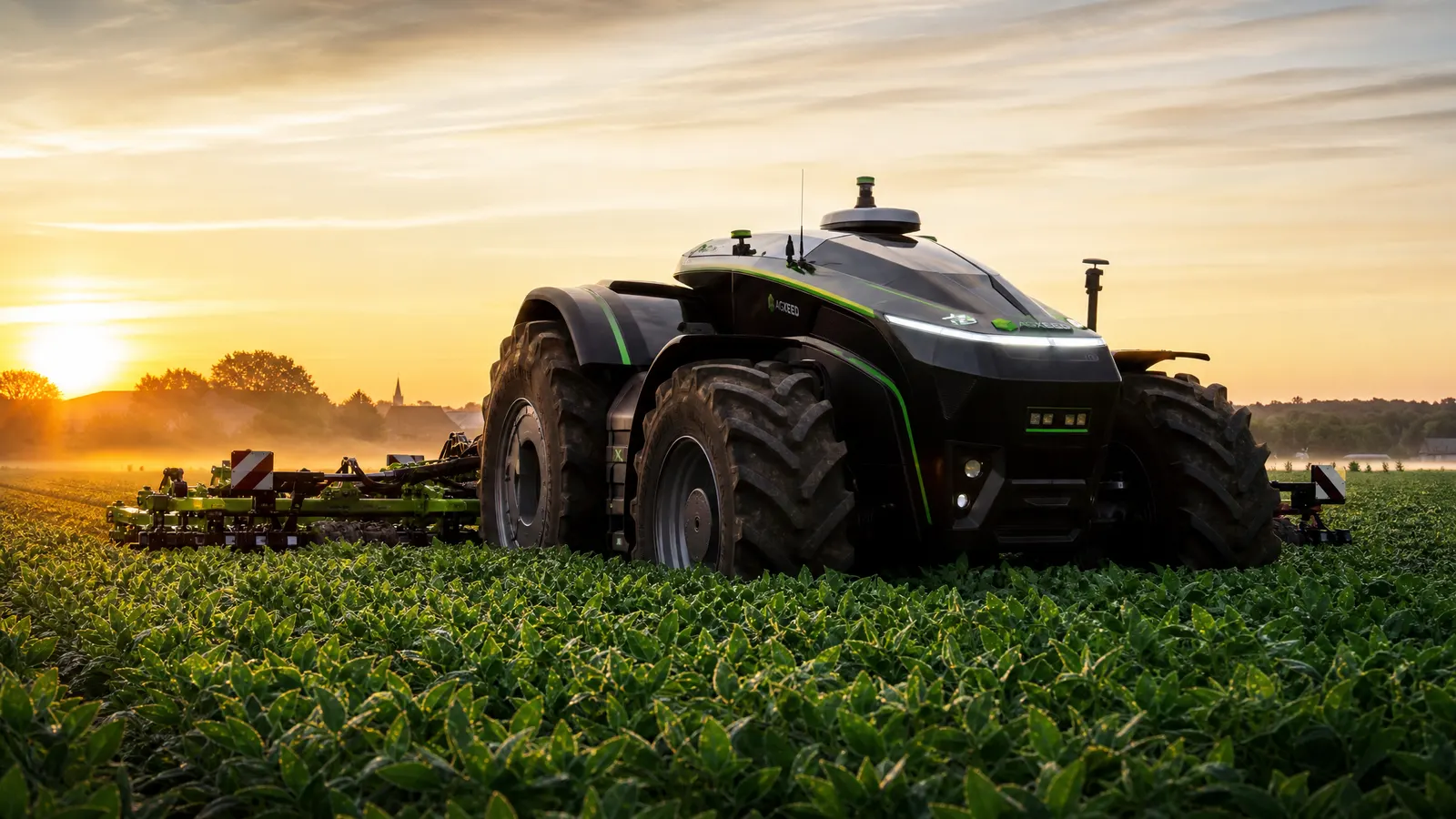
Agricultural RoboticsDiscover the key players and investment opportunities in agricultural robotics. Our 2026 guide covers autonomous tractors, drone sprayers, and the tech revolutionizing farming.
Warehouse AutomationA focused list of warehouse automation companies — public, late-stage private, and recently acquired — that investors and operators should be tracking through 2026.
China's 15th Five-Year Plan places humanoid robots and physical AI at the core of national strategy. Here is what the policy prioritizes, which companies are positioned to benefit, and what it means for the global robotics race.
Examining the core strengths—engineering talent, deep supply chains, and strategic policy—propelling China's shift to advanced manufacturing and robotics.
DAIMON Robotics introduces Daimon-Infinity, the largest omni-modal robotic dataset, bringing tactile sensing to the forefront of physical AI development.
Flex and Teradyne are expanding their collaboration to scale physical AI in global manufacturing, deploying UR and MiR robots for efficiency.
A comprehensive forecast of AI-driven robotics investment for 2026 — sector breakdown, top public companies, private capital flows, geopolitics, and a long-term framework for investors.
Explore the booming robotics sector and discover the key robot stocks to watch. Our 2026 guide covers top companies, market trends, and how to start investing.
India's robotics sector is booming. Discover five innovative startups that are shaping the future of automation in manufacturing, logistics, and healthcare.
Surgical robotics is one of the few robot markets with real scale. In 2026, Intuitive leads, but J&J Ottava and Medtronic Hugo are finally forcing a real contest.
China's massive investment in quadruped and aerial robots to fortify its electricity grid signals a strategic shift in critical infrastructure management.
A recent panel of experts in London addressed the UK's growing automation gap, outlining a blueprint for a robotic workforce that could redefine the nation's economic future.
A landmark partnership between Siemens, Nvidia, and Humanoid aims to bring physical AI and humanoid robots from virtual simulations into real-world factory operations.
How one robotics startup is deploying AI-powered automation to revive US shipbuilding and close the gap with China's naval dominance.
While dozens of cooking robot startups flamed out, Chef Robotics is thriving. Their secret? They stopped trying to replace chefs.
Skild AI acquires Zebra's robotics division to deploy its universal AI brain across global logistics — a move that could reshape warehouse automation.
Tesla China confirms Shanghai Gigafactory could produce humanoid robots, signaling a major strategic pivot for the world's most watched robot program.
Path Robotics pairs its Obsidian AI with a walking robot to bring autonomous welding to shipyards, construction sites, and beyond.
Boston Dynamics equips Spot with DeepMind's Gemini Robotics-ER 1.6, giving the robot dog advanced reasoning for industrial inspections.
China leads global robot installations, has more humanoid startups than any nation, and is targeting mass production by 2027.
The global race to build humanoid robots is heating up. Here's how the US, China, and India are positioning themselves.
Barclays projects autonomous robots and drones could cut food delivery costs to $1 per order, reshaping the economics of last-mile logistics.
The top warehouse automation robots in 2026, from Amazon Robotics to Symbotic, plus the tech stack and investment angles driving logistics automation.