TL;DR: China accounted for over 50% of global industrial robot installations in 2025 and now has the highest manufacturing robot density among major economies. Key players include UBTECH, Unitree, Fourier Intelligence, and Midea/KUKA. The Chinese government has set a target for mass-producing humanoid robots by 2027, backed by billions in state funding and provincial subsidies.
If you've been tracking the global robotics race, you already know the leaderboard is shifting. China's robotics industry isn't just catching up — in several key areas, it's pulling ahead. From humanoid prototypes hitting factory floors to record-breaking industrial robot installations, 2026 is shaping up as the year China cements itself as the world's robotics superpower.
China's Robot Installation Numbers
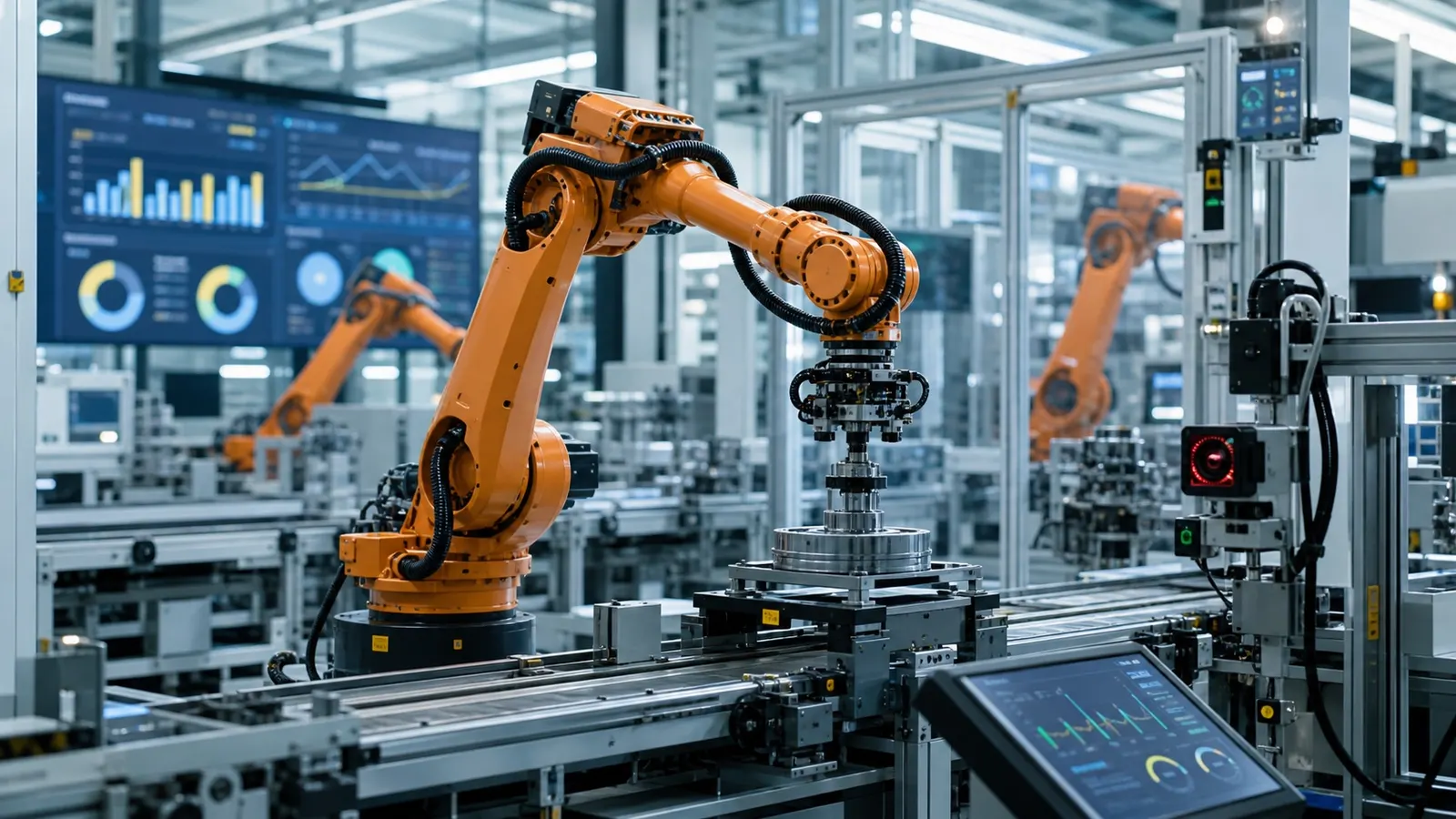
China installed more industrial robots in 2025 than any other country — again. According to the International Federation of Robotics, China accounted for over 50% of global industrial robot installations, a share that's been climbing steadily for the past decade. As of 2026, the country has the highest robot density in manufacturing among major economies, surpassing Germany and Japan in units per 10,000 workers.
But the real story isn't just quantity. It's the rapid shift from importing foreign robots to building competitive domestic alternatives. Chinese manufacturers are increasingly choosing homegrown robotic systems over offerings from legacy players like Fanuc, ABB, and KUKA.
Key Chinese Robotics Companies to Watch
UBTECH Robotics
UBTECH made global headlines with its Walker S humanoid robot, which completed real assembly-line tasks at a NIO electric vehicle factory in late 2025. The company has since expanded pilot programs to logistics and inspection roles. UBTECH went public on the Hong Kong Stock Exchange and remains one of the most closely watched pure-play humanoid robotics stocks in Asia.
Unitree Robotics
Unitree has carved out a niche with affordable quadruped and humanoid robots. Their G1 humanoid, priced at a fraction of what competitors charge, generated massive buzz in 2025. In 2026, Unitree is pushing into industrial applications and B2B contracts while keeping its consumer-grade robots accessible to researchers and hobbyists.
Fourier Intelligence
Focused on rehabilitation and human-robot interaction, Fourier's GR-2 humanoid robot is designed for healthcare and service environments. The company is positioning itself at the intersection of robotics and aging population needs — a demographic sweet spot for China, where the over-60 population is expected to exceed 400 million by 2035.
Midea Group (KUKA)
Midea's 2016 acquisition of German robotics giant KUKA gave China instant access to world-class industrial automation IP. In 2026, Midea continues to leverage KUKA's technology while expanding production domestically. This makes advanced robotic arms more affordable for small and mid-size Chinese manufacturers.
Government Backing: The Policy Engine
China's robotics boom isn't purely market-driven. The government's "Robot+" initiative, launched in 2023, set explicit targets for robotics adoption across manufacturing, agriculture, healthcare, and logistics. Provincial governments offer subsidies, tax incentives, and land grants to robotics startups. Shenzhen, Shanghai, and Beijing have all declared ambitions to become global robotics hubs.
The 14th Five-Year Plan identified robotics as a strategic emerging industry, and funding has followed. According to government reports, Beijing alone funded over $1.4 billion in robotics research in 2025. State-backed venture capital, university research programs, and special economic zones focused on intelligent manufacturing all feed the pipeline. The 15th Five-Year Plan (2026–2030) doubles down further, designating humanoid robots and physical AI as critical national infrastructure — see the full breakdown of China's 15th Five-Year Plan robotics strategy for the specific targets and what they mean for investors and competitors. The plan also extends data-collection privileges to robotics companies operating in public and semi-public spaces — and the most concrete early example of this logic in practice is Alibaba's Amap subsidiary. Amap holds China's most comprehensive navigation dataset from years of real-world mapping and routing, and has launched a quadruped robot program specifically to leverage that geospatial data for physical AI training. Infrastructure position first; robot product as the data-collection vehicle.
What China Does Differently
One advantage China holds is sheer scale of deployment. While Western companies often spend years in pilot programs, Chinese firms move from prototype to factory floor at remarkable speed. The combination of a massive manufacturing base, willing corporate adopters, and government pressure to automate creates a feedback loop that accelerates development.
Labor dynamics also play a role. China's working-age population is shrinking, and factory wages have risen steadily. Automation isn't just a tech play — it's an economic necessity. Companies that don't automate risk losing competitiveness, and the government knows it.
The Humanoid Robot Race in China
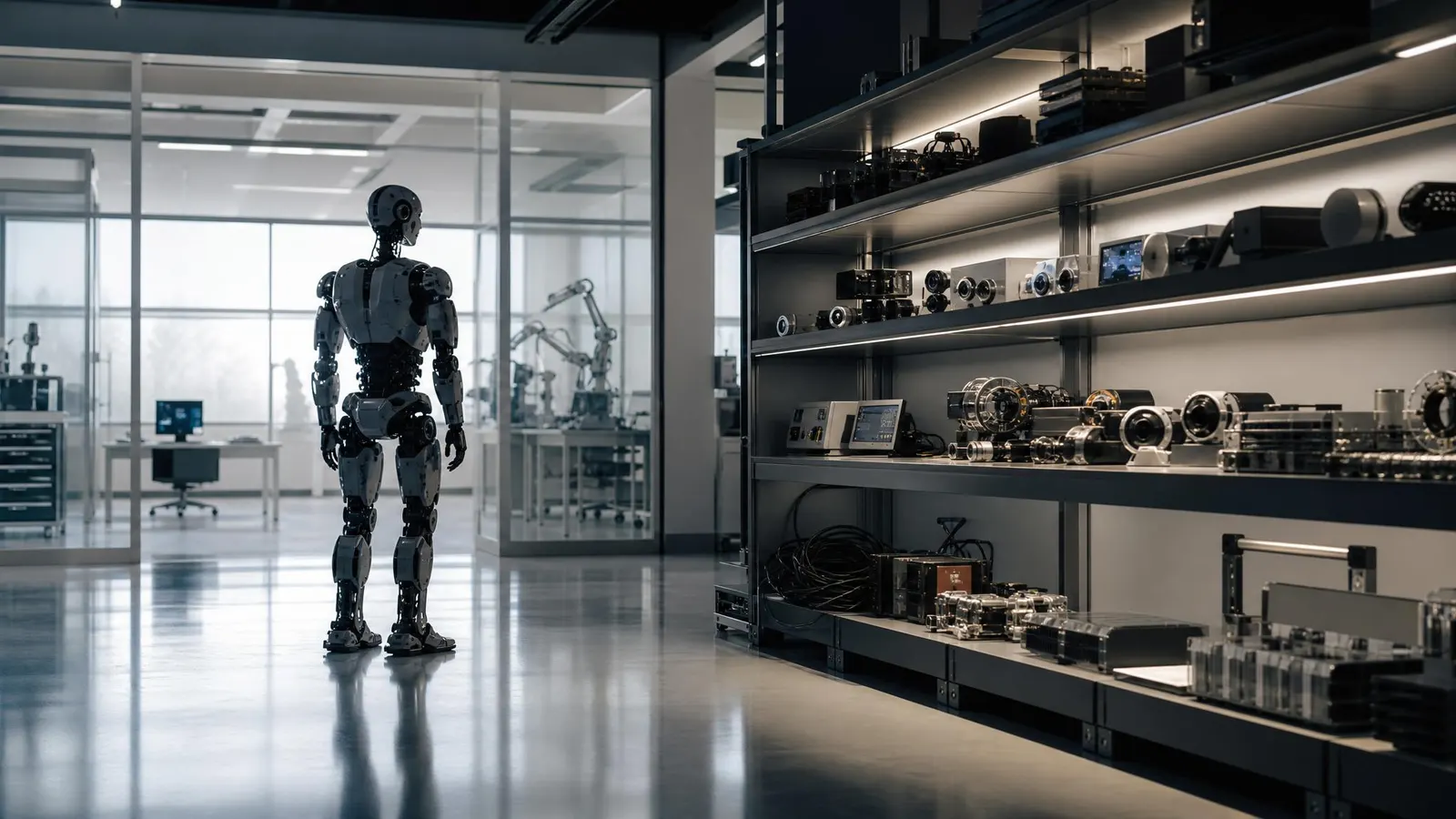
China now has more humanoid robot startups than any other country. Beyond UBTECH, Unitree, and Fourier, companies like Agibot, Galbot, and Star Dynamics are all racing to deliver general-purpose humanoid platforms. The Chinese government has stated a goal of mass-producing humanoid robots by 2027, a timeline that many analysts initially dismissed but are now taking seriously.
This puts China in direct competition with U.S. efforts from Boston Dynamics, Figure AI, Tesla (Optimus), and Agility Robotics. The difference? China's approach leans heavily on cost efficiency and rapid iteration, while U.S. firms tend to prioritize cutting-edge AI and autonomy. Both strategies have merit. The next few years will reveal which approach scales faster.
What This Means for Investors
For anyone watching the robotics space, China is impossible to ignore. If you want to go deeper on the technical and geopolitical dimensions, The Robot Report's industry analysis is a solid resource for tracking global developments.
For a foundational understanding of where robotics is headed, Introduction to Robotics by John Craig remains a classic textbook that covers the mechanics and control systems underpinning these machines. If you're more interested in the investment angle, The Robotic Process Automation Handbook offers practical frameworks for understanding how automation creates business value — essential context for evaluating which companies are built to last.
Investors looking at direct exposure might also explore robotics and AI ETFs on Amazon's book selection for curated reading on the sector.
The Bottom Line
China's robotics industry has moved past the "interesting experiment" phase and into serious, scaled deployment. The combination of government will, manufacturing scale, demographic pressure, and increasingly capable domestic companies means this isn't a trend that's going to reverse.
Whether you're an engineer, investor, or just someone who wants to understand where the world is heading, China's robotics story is one of the most consequential technology narratives of the decade. The sleeping giant didn't just wake up — it's building robots.
Frequently Asked Questions
How many industrial robots does China install per year?
According to the International Federation of Robotics, China accounted for over 50% of all global industrial robot installations in 2025. The country has maintained its position as the world's largest market for industrial robots for over a decade, and now has the highest robot density in manufacturing among major economies.
What are the top Chinese robotics companies?
The leading Chinese robotics companies in 2026 include UBTECH Robotics (humanoid robots, Hong Kong-listed), Unitree Robotics (affordable quadruped and humanoid platforms), Fourier Intelligence (rehabilitation and healthcare robots), Midea Group/KUKA (industrial automation), and emerging players like Agibot, Galbot, and Star Dynamics.
When will China mass-produce humanoid robots?
The Chinese government has set a target for mass-producing humanoid robots by 2027. As of 2026, multiple companies including UBTECH and Agibot are already running factory pilot programs, and Unitree is selling consumer-grade humanoid robots via e-commerce platforms. Industry analysts now take the 2027 target seriously.
How does China's robotics strategy differ from the US?
China's approach emphasizes cost efficiency, rapid iteration, manufacturing scale, and heavy government subsidies. The U.S. prioritizes cutting-edge AI research, venture capital-funded innovation, and advanced autonomy. China excels at moving quickly from prototype to factory floor, while the U.S. leads in foundational AI and software capabilities.
Is China's robotics industry a good investment?
China's robotics sector has seen significant investor enthusiasm, with IPOs like one Nvidia-alum-founded company surging 187% on its first day of trading. However, risks include regulatory uncertainty, US export controls on AI chips, thin margins, and a crowded competitive landscape. UBTECH on the Hong Kong Stock Exchange and robotics-focused ETFs are common entry points.
Why is China automating so aggressively?
China faces a shrinking working-age population and steadily rising factory wages. Automation is an economic necessity, not just a technology play. The government's "Robot+" initiative and 14th Five-Year Plan explicitly target robotics adoption across manufacturing, agriculture, healthcare, and logistics to maintain global competitiveness.