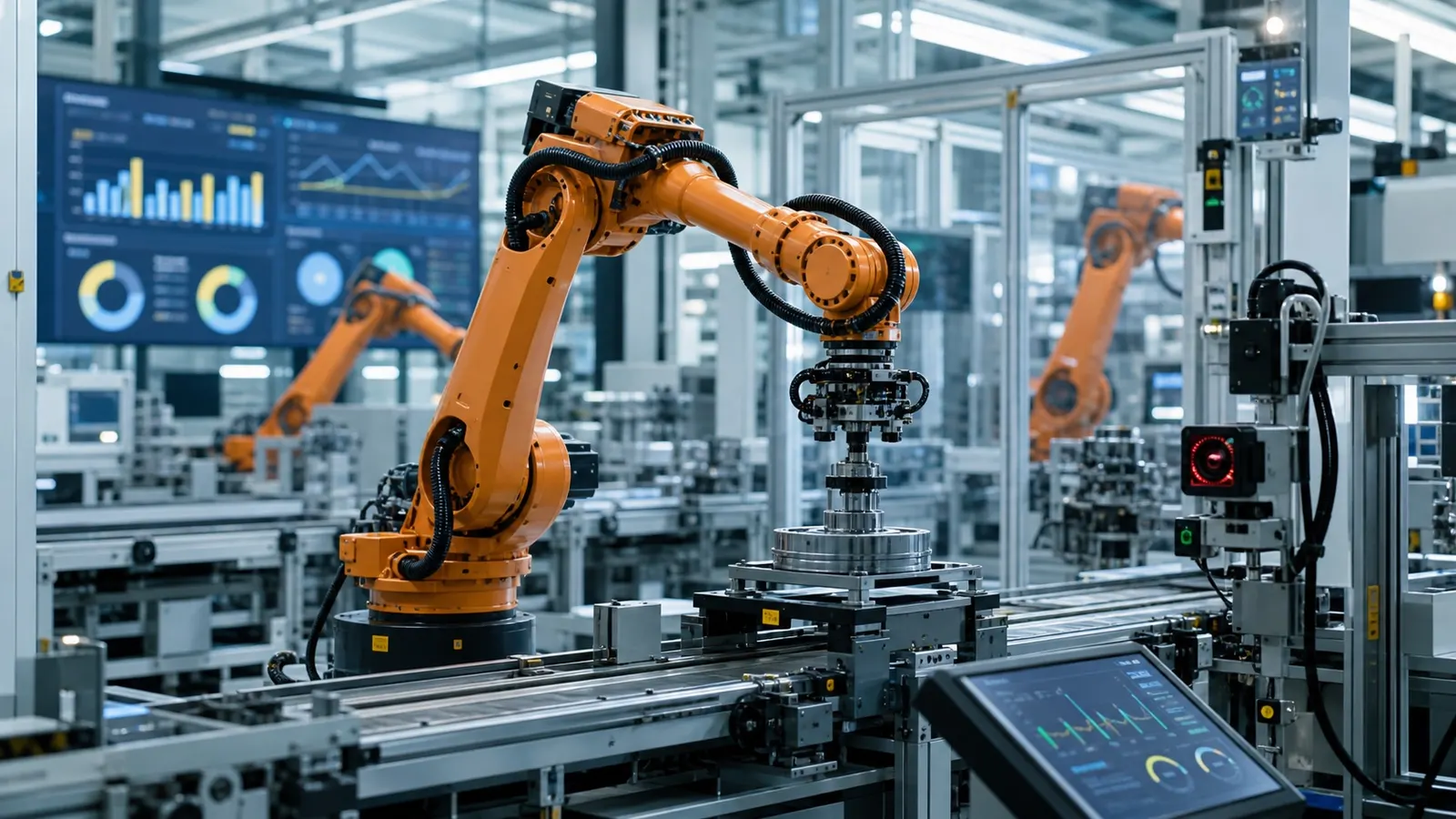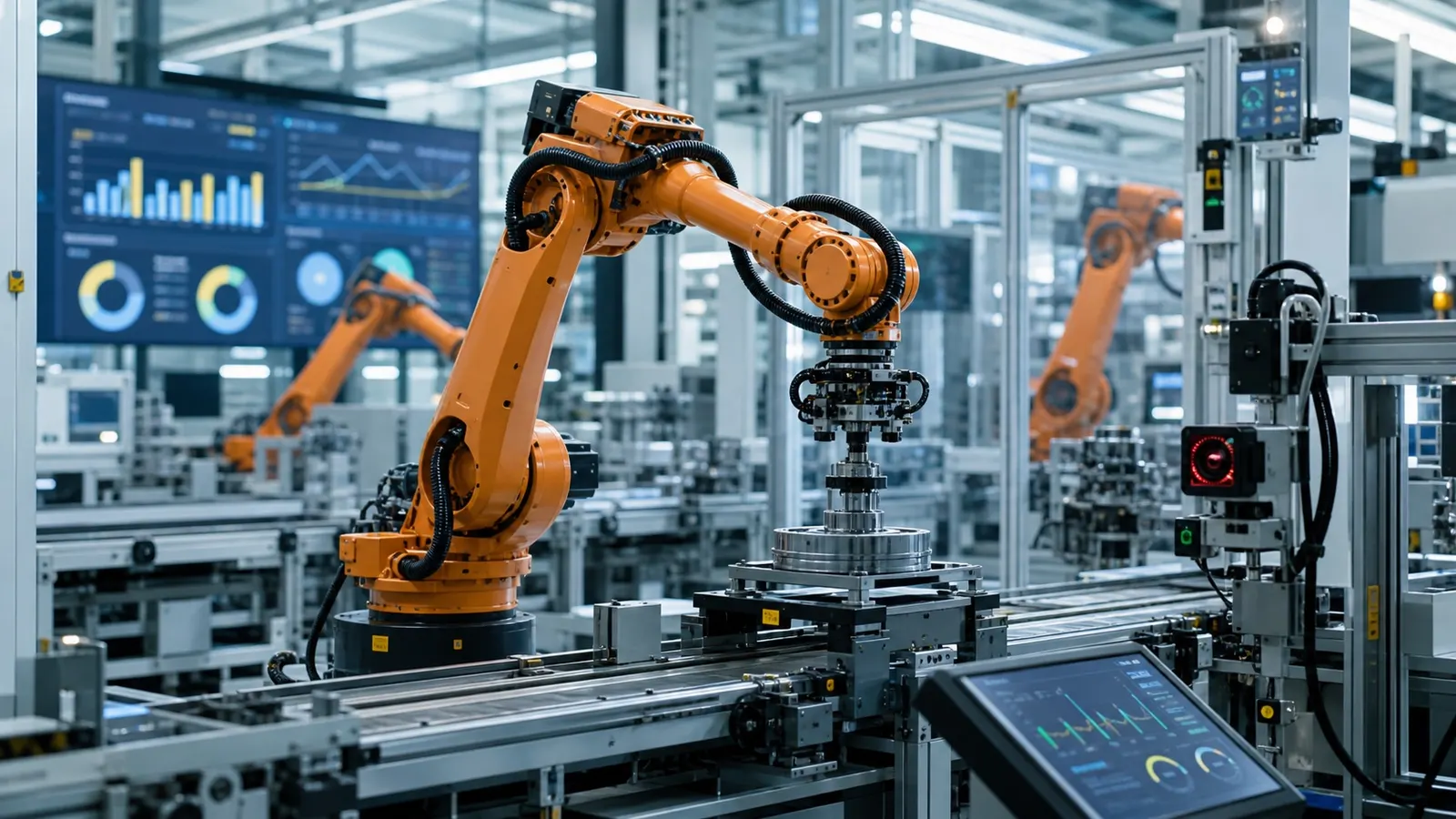
Robot foundation models are the reason the humanoid robot race suddenly feels different. The old robotics playbook was to program one machine for one narrow task. The new playbook is to train a broad AI model on physical-world data, then use that model to help many different robot bodies perceive, plan, move, and manipulate objects.
That shift is what people mean when they talk about physical AI. It is not just AI that describes the world. It is AI that can act in it.
This guide explains what a robotics foundation model is, how they work, why companies like Physical Intelligence, Nvidia, Skild AI, Google DeepMind, and Tesla care about them, why foundation model robot data is the real competitive moat, and how to tell the difference between a meaningful deployment signal and another impressive demo.
For the broader market map, start with the RoboBrief humanoid robots tracker for 2026. This page is the deeper explainer on the "brain" layer behind that tracker.
---
The Fast Answer
A robot foundation model is a general AI model trained to help robots perform physical tasks across different objects, environments, and robot bodies.Instead of writing custom code for every warehouse tote, factory part, door handle, or kitchen object, developers train a model on diverse robot data:
- camera views
- depth maps
- force and tactile signals
- joint positions
- human demonstrations
- simulation data
- successful and failed robot actions
The goal is not magic autonomy. The goal is transfer: a robot learns enough from many tasks that it can adapt faster to the next one.
In 2026, that matters most in:
- Humanoid robots that need one control stack for walking, reaching, grasping, and tool use.
- Warehouse robots that face messy bins, mixed inventory, and changing layouts.
- Factory automation where new product designs break brittle hard-coded routines.
- Mobile manipulation systems that combine navigation with arms, grippers, and perception.
---
If You Are Evaluating Foundation Model Robot Data
The most useful way to read a robotics foundation-model claim is to ask what data would make the model better tomorrow. A real general robot foundation model needs more than video of a successful demo. It needs the messy interaction record behind the demo: failed grasps, teleoperated corrections, force feedback, cycle-time logs, recovery behavior, and repeated runs across different robot bodies.
Use this quick filter:
| Question | Stronger signal | Weaker signal |
|---|---|---|
| Where does the robot data come from? | Customer sites, live fleets, teleoperation programs, or high-fidelity simulation tied back to real robots | One lab setup, one edited demo, or generic web/video data |
| How broad is the embodiment mix? | Multiple arms, grippers, hands, mobile bases, or humanoids | One robot body doing one task |
| Does the data include failure? | Slips, jams, retries, human corrections, and unsafe-action rejections are captured and used | Only clean success clips are shown |
| Can the loop compound? | Every deployment creates more validation and training signal | Data is a one-time collection project |
That is the difference between robotics foundation model data as a durable asset and a foundation-model label used as marketing. Physical Intelligence's reported $1 billion funding target at an $11 billion valuation is important for the same reason: investors are pricing the robot software layer as if cross-embodiment data and general-purpose control models can become a platform, not just a research milestone.
---
Why Robotics Needed Foundation Models
Traditional robots are excellent when the world is predictable.
A factory arm can weld the same joint thousands of times. A pick-and-place robot can move identical parts between fixed stations. An autonomous mobile robot can follow a mapped route through a warehouse.
The problem is that real work rarely stays that clean.
Parts shift. Boxes arrive crushed. Humans stand in the way. Lighting changes. Floors are uneven. A tool is upside down. A tote has twenty object types instead of one.
That is where the old robotics stack becomes expensive. Every variation needs more engineering, more edge-case handling, and more maintenance. The robot may be automated, but the deployment is still labor-intensive.
Foundation models are an attempt to compress that engineering burden. They give robots a broader prior: a learned sense of how objects, hands, motion, surfaces, containers, and tasks usually behave.
That does not eliminate programming. It changes what programming is for.
Instead of scripting every movement, teams define goals, constraints, safety boundaries, and workflows. The model fills in more of the low-level perception and action planning.
---
The Main Types of Robot Foundation Models
Vision-language-action models
These models connect what a robot sees, what a human asks for, and what action the robot should take.
Example:
Instruction: put the red tool in the left bin
Perception: camera/depth view of the workspace
Action: reach, grasp, lift, move, release
Google DeepMind's RT-style work helped popularize this direction. The important idea is that language becomes a high-level control interface, while the model still has to translate that instruction into physical action.
Manipulation models
Manipulation models focus on hands, grippers, arms, contact, and objects. They are critical because locomotion gets the robot to the task, but manipulation is what creates economic value.
Physical Intelligence's π0.7 general-purpose robot brain is one of the most watched examples because it aims at broad manipulation generalization: doing useful things the system was not explicitly trained to do one task at a time.
World models and simulation models
World models help robots predict what will happen next. If the gripper pushes a box from the side, will it slide, tip, jam, or fall? If a humanoid steps onto a rubber mat, will balance change?
Simulation matters because real-world robot data is expensive and slow. Nvidia's robotics stack, including Isaac simulation tools, is built around narrowing the sim-to-real gap. See the Siemens and Nvidia physical AI factories piece for how this simulation-first workflow is moving into manufacturing.
Hardware-agnostic control models
The most ambitious claim is that one model can transfer across many robot bodies: humanoids, wheeled mobile manipulators, quadrupeds with arms, warehouse AMRs, or fixed robot arms.
Skild AI, Physical Intelligence, and several research labs are chasing versions of this idea. If it works, the most valuable layer in robotics may not be the robot body. It may be the control model that can run across bodies.
---
Why This Matters for Humanoid Robots
Humanoids are the ultimate test case for robot foundation models because they combine almost every hard robotics problem:
- balance
- locomotion
- whole-body control
- hand-eye coordination
- dexterous manipulation
- human-space navigation
- safety near people
- task planning
No company wants to hand-code all of that forever.
That is why humanoid progress is tied to the foundation model race. Figure AI, Tesla Optimus, Unitree, Agility Robotics, UBTECH, and AGIBot may look like hardware companies from the outside, but the long-term competition is increasingly about the learning stack behind the machine.
The RoboBrief humanoid robots tracker breaks down the company and deployment side. The foundation model layer explains why the category is accelerating.
---
What Counts as a Real Deployment Signal?
Robot foundation model announcements can be hard to evaluate because demos look great and failures are rarely public. Use this filter.
Strong signals
- Robots performing tasks in a customer site, not only a lab.
- Repeatable work over days or weeks, not one edited clip.
- Multiple object types, lighting conditions, and layouts.
- Human intervention rate disclosed or inferable.
- Customer renewal, expansion, or additional unit order.
- Clear integration with safety, monitoring, and maintenance workflows.
Weak signals
- A single viral video.
- A task performed once under perfect lighting.
- No runtime, failure, or intervention data.
- No named customer or deployment environment.
- Language like "toward" or "paves the way" without operational detail.
This is why the 88% household task failure rate matters. The issue is not whether robots can do impressive things. They can. The question is whether they can do boring useful things reliably enough to justify deployment.
---
The Business Model Shift
If robot foundation models improve, robotics companies can change how they sell.
The old model:
Sell robot hardware
Customize deployment
Program workflow
Maintain edge cases manually
The emerging model:
Sell robot fleet
Collect deployment data
Improve shared model
Roll updates across customers
Charge for hardware + software + uptime
That second model looks more like a software platform wrapped in machinery. It is why investors care so much about deployed fleets. Every robot in the field can become a data-collection and learning node, assuming privacy, safety, and customer agreements allow it.
For the investor layer, pair this explainer with:
- AI and robotics investment trends for 2026
- Robotics ETFs vs individual stocks in 2026
- Humanoid robots 2026: investor reality check
---
The Bottlenecks
Robot foundation models are not a shortcut around physics.
The biggest bottlenecks are still practical:
- Data quality: robot data is expensive, messy, and hardware-specific.
- Safety: a bad language-model answer is annoying; a bad robot action can injure someone.
- Latency: physical control often needs fast local decisions, not slow cloud reasoning.
- Generalization: transferring from simulation to real environments remains hard.
- Hardware limits: weak grippers, poor tactile sensing, short battery life, and actuator heat can ruin a good model.
- Evaluation: the industry lacks a universal benchmark that maps cleanly to commercial usefulness.
The Texas Instruments humanoid engineering breakdown is the useful counterweight here: better AI does not remove the need for better sensors, power systems, motors, and safety electronics.
---
Robotics Foundation Model Data: Why the Dataset Is the Real Moat
Here is the uncomfortable truth behind most robotics foundation model hype: the model architecture is rarely the bottleneck. The dataset is. Two teams can copy the same vision-language-action design and read the same papers, but they cannot easily copy each other's foundation model robot data. That data is what a competitor actually has to earn, hour by hour, on real hardware.
Why is the data the moat? Because useful robot behavior is learned from experience that is expensive and slow to collect:
- Teleoperation demonstrations: humans piloting real robots through real tasks, capturing how a skilled operator adjusts grip, approach angle, and timing.
- Simulation rollouts: cheap, fast, and scalable, but only valuable when they transfer to physical hardware.
- Real-world deployment logs: the messy, unglamorous record of robots working full shifts across changing lighting, layouts, and objects.
- Force and tactile signals: the contact-rich data that cameras alone cannot capture, and that manipulation depends on.
- Failure cases: the runs where the gripper slipped, the box tipped, or the plan broke — often more instructive than the clean successes.
That is also what people mean by general robot foundation model data. "General" is not a marketing adjective here; it points to cross-embodiment diversity. If your robot foundation model data comes from one robot body doing one task in one warehouse, the model overfits to that setting. If it spans many embodiments — different arms, hands, grippers, humanoids, and mobile manipulators — across many tasks and environments, the model has a chance at transfer: adapting to the next robot and the next task instead of relearning from scratch.
This is the skeptic's lens RoboBrief keeps returning to. A polished demo tells you a model can do a task once. A strong data position tells you a company can keep improving across tasks it has never seen. The physical AI data-moat tracker exists precisely because the durable advantage in this category is not the flashiest architecture — it is who controls the diverse, real-world interaction data that a general robot foundation model needs to actually generalize.
The infrastructure layer is the other half of that moat. Data only compounds when teams can simulate, label, validate, deploy, monitor, and roll back robot behavior across real fleets. For that operating-stack view, see RoboBrief's breakdown of physical AI infrastructure and robotics foundation model data.
Robot Data Moat vs Physical AI Infrastructure
The simplest way to separate the two ideas is this: robotics foundation model data is the fuel; physical AI infrastructure is the refinery. A company needs both. Raw robot logs do not automatically become a better general robot foundation model, and a clean MLOps stack does not matter if the company has no real interaction data flowing through it.
| Layer | What it includes | Why it matters |
|---|---|---|
| Robotics foundation model data | Teleoperation runs, failed grasps, force signals, fleet logs, simulation rollouts, human corrections | Teaches the model how objects, contacts, tools, and robot bodies behave in the real world |
| Physical AI infrastructure | Simulation, labeling, validation, safety testing, edge deployment, monitoring, rollback, fleet update pipelines | Turns messy robot experience into safer model updates that can ship across customer sites |
| Durable advantage | Cross-embodiment data from many robots in many environments | Helps a model transfer beyond one lab demo or one fixed workcell |
| Operational proof | Low intervention rates, repeatable shifts, customer expansion, auditable update history | Shows that the physical AI data moat is becoming useful work, not just a bigger dataset |
For readers tracking the foundation model robot data query cluster, this distinction matters. The moat is not just who has the most video. It is who can turn contact-rich, failure-rich, cross-body robot experience into validated behavior that keeps improving in the field.
---
What to Watch Next
The most important robot foundation model signals over the next 12-24 months are:
- Cross-body transfer: can one model run useful tasks on different robot forms?
- Customer-site reliability: can robots work for full shifts with low intervention?
- Manipulation breadth: can a robot handle varied tools, packaging, parts, and deformable objects?
- On-device inference: can the model run close enough to the robot for safe action?
- Data flywheels: can deployed fleets improve the model faster than lab-only competitors? China's 15th Five-Year Plan robotics strategy is explicitly targeting this flywheel through scale deployment and data-collection privileges for state-linked robot fleets. Alibaba's Amap robot dog project is one of the clearest illustrations of this logic: a mapping and navigation platform with years of real-world geospatial data launching a quadruped robot specifically to leverage that data advantage for embodied AI training. See the physical AI data-moat tracker for a running comparison of who holds real data advantages.
- Safety certification: can the industry prove these systems are auditable and insurable?
2026 Signals to Watch
For readers tracking robotics foundation model announcements in 2026, the useful signal is not whether a company uses the foundation-model label. It is whether the announcement shows a stronger loop between data, model transfer, manipulation, simulation, and deployment.
| Signal | Why it matters | RoboBrief evidence to compare |
|---|---|---|
| Cross-platform portability | A general robot foundation model has to survive movement between robot bodies, not just run on the body it was trained for | CMU's robot AI portability infrastructure |
| Manipulation reliability | Useful physical AI needs contact-rich success, recovery, and failure data from real object handling | PokeBot's manipulation funding signal |
| Simulation tied to real validation | Synthetic data only compounds when it is checked against physical robots and deployment constraints | Lightwheel's robotics simulation-data infrastructure |
| World-model data | Robots need to predict how scenes change after an action, not just recognize objects in a frame | Infiforce's ego-native world-model bet |
| Durable data ownership | The strongest teams can keep collecting proprietary foundation model robot data after launch | Physical AI data-moat tracker |
This is the practical search filter: a robotics foundation model is only as persuasive as the loop that makes it better after the demo. If a team can show portable policies, contact-rich manipulation data, validated simulation, world-model learning, and a proprietary deployment stream, the claim is meaningfully stronger. If it only shows a clean video, treat it as a research milestone until the operating evidence catches up.
The winners may not be the companies with the most dramatic humanoid demo. They may be the companies that turn physical AI into a repeatable operating system for useful work.
---
FAQ
What is a robotics foundation model?
A robotics foundation model is a general AI model trained on diverse physical-world data so it can help many different robot bodies perceive, plan, move, and manipulate objects. Instead of hand-coding one machine for one narrow task, developers train the model on demonstrations, simulation, and real-world robot data, then adapt it to new tasks. The aim is transfer, not magic autonomy: the robot learns enough from many tasks to pick up the next one faster.
What data do robot foundation models need?
They need diverse, real-world interaction data — not just more of it, but broader kinds of it. That means teleoperation demonstrations, simulation rollouts, real deployment logs, force and tactile signals, and failure cases, ideally collected across many different robot bodies and environments. This cross-embodiment diversity is what turns robot foundation model data into transferable skill rather than one-warehouse overfitting.
Is foundation model robot data the real bottleneck?
Yes — more often than the model architecture. Competing teams can reuse similar model designs, but they cannot easily copy each other's foundation model robot data, which has to be earned on real hardware over time. That is why a strong data position is a better predictor of durable progress than a single polished demo.
Are robot foundation models the same as large language models?
No. Large language models predict and generate language. Robot foundation models may use language, but they also need to connect perception to action: seeing objects, predicting motion, controlling motors, and handling contact with the physical world.
Do foundation models make robots general-purpose?
Not yet. They make robots more adaptable, but today's systems still work best inside constrained environments such as factories, warehouses, labs, and carefully scoped service workflows.
Why are humanoids connected to foundation models?
Humanoids need a broad control stack because they are expected to move through human-designed spaces and perform many task types. A narrow task-specific controller is not enough for that ambition.
Which companies matter most?
Watch Physical Intelligence, Nvidia, Google DeepMind, Skild AI, Tesla, Figure AI, Agility Robotics, Unitree, and major industrial automation companies integrating simulation, AI, and robot fleets.
What is the simplest way to evaluate a claim?
Ask: did it work in a real customer environment, repeatedly, with low human intervention? If the answer is no, treat it as progress, not proof.
---
RoboBrief tracks the companies, models, and deployment signals turning physical AI from a demo category into a working robotics market. For the full company map, see the humanoid robots 2026 tracker.