The quick answer: the surgical robotics market in 2026 is no longer a one-company story, but it is still not a free-for-all. Intuitive Surgical remains the category benchmark, Johnson & Johnson and Medtronic are trying to turn deep hospital relationships into share, and smaller specialists are building around procedures where precision, imaging, and navigation matter most. For investors, the real question is not whether robotic surgery grows. It is which platforms can earn recurring revenue without drowning hospitals in cost, training, and integration complexity.
If you want the product landscape first, start with our broader look at surgical robotics in 2026. This guide focuses on the market: growth drivers, business models, stock angles, and the risks that can make an impressive operating-room robot a mediocre investment.
Why Surgical Robotics Is Still Compounding
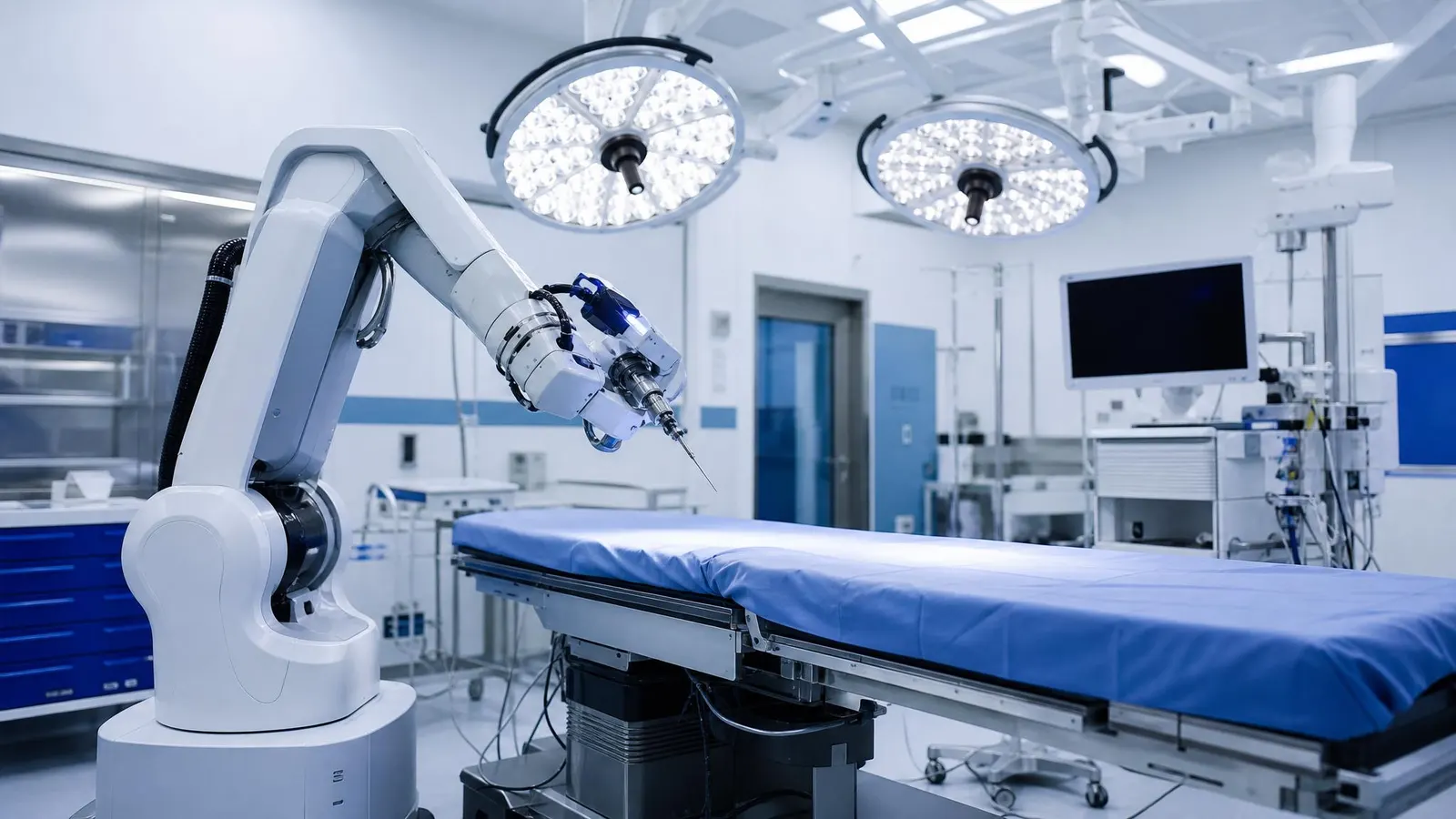
Surgical robots solve a different problem than factory robots. They do not replace the surgeon. They give the surgeon steadier control, better visualization, smaller incisions, and more repeatable workflows in procedures where millimeters matter.
That matters because hospitals are under pressure to improve outcomes while managing staffing shortages and operating-room utilization. If a robotic platform can reduce complications, shorten stays, or help a hospital attract high-value procedures, administrators will listen. The sales cycle is slow, but once a system is installed and surgeons are trained, usage can become sticky.
The best market signal is procedure volume. Hardware placements get headlines, but recurring instruments, accessories, service contracts, and software are where the economics become durable. A robot that sits underused is a capital-equipment problem. A robot that becomes part of a hospital's weekly procedure mix is a platform.
The Companies Investors Watch
Intuitive Surgical is still the standard. The da Vinci installed base, surgeon familiarity, procedure library, and recurring revenue stream create a moat that is hard to copy quickly. The valuation often reflects that quality, so investors need to watch procedure growth, system utilization, and gross margin rather than simply saying "robotic surgery is growing."
Johnson & Johnson's Ottava program is the most important challenger to monitor. J&J already sells into operating rooms, knows hospital procurement, and has the balance sheet to stay patient. The risk is execution: surgical robotics punishes delays, recalls, and awkward training workflows.
Medtronic's Hugo system gives the company a credible multi-port platform and global commercial footprint. The strategic logic is clear, but adoption needs to show up in measurable placements and repeat procedures, not just conference demos.
Stryker, Zimmer Biomet, Smith+Nephew, and Globus Medical are also relevant, especially in orthopedics, spine, navigation, and procedure-specific robotics. These may not look as glamorous as a general soft-tissue robot, but specialized systems can be commercially attractive when they fit an existing implant or instrument franchise.
What Makes the Business Model Attractive
The strongest surgical robotics businesses combine expensive capital equipment with recurring consumables and service. A hospital may buy or lease the robot, then keep purchasing instruments, accessories, maintenance, software, and upgrades as procedure volume grows.
That recurring layer is why investors care. It can smooth revenue and create visibility, especially when the installed base expands. It also makes training and ecosystem lock-in important. Once a surgeon has built muscle memory on a platform, switching is not like changing laptops.
For investors doing deeper work, a clean research setup helps. A second display such as the Dell UltraSharp 27-inch monitor makes it easier to compare earnings decks and procedure charts, while a reusable notebook like the Rocketbook Core is useful for tracking quarterly thesis notes.
The Risks That Matter Most
Regulation is the first risk. Surgical robots touch patient safety directly, so approvals, indications, post-market data, and adverse-event reporting matter. The FDA's overview of computer-assisted surgical systems is a useful baseline for understanding how regulators frame the category.
Cost is the second risk. Hospitals do not buy robots because the demo looks futuristic. They buy when the economic case survives budget scrutiny. If reimbursement is weak, utilization is low, or instrument costs are too high, adoption slows.
Training is the third risk. A platform can have excellent engineering and still struggle if surgeons and operating-room staff find it cumbersome. Robotic surgery is a workflow sale, not just a hardware sale.
Competition is the fourth risk. More challengers can expand the market, but they can also pressure pricing and force higher spending on sales, support, and clinical evidence. A challenger has to prove it can win procedures profitably, not merely install systems at promotional pricing.
How to Track the Market in 2026
Follow three numbers before everything else: installed base, procedure volume, and recurring revenue per system. Installed base shows reach. Procedure volume shows usage. Recurring revenue shows whether the platform is becoming a habit inside hospitals.
Then watch procedure expansion. A robot that moves from one niche into several common procedures has a bigger addressable market and better utilization. Also pay attention to geography. U.S. adoption may look different from Europe, Japan, China, and emerging markets because approvals, hospital budgets, and reimbursement vary widely.
For document-heavy research, an e-ink tablet such as the Boox Note Air series can make long clinical papers and annual reports less painful to read. For investors who annotate printed filings, a basic document scanner can keep notes searchable.
FAQ
Is the surgical robotics market still dominated by Intuitive Surgical?
Yes, especially in soft-tissue robotic surgery. The market is becoming more competitive, but Intuitive's installed base, procedure history, and surgeon familiarity remain major advantages.
Are surgical robotics stocks good long-term investments?
They can be, but quality varies. The best candidates show rising procedure volume, recurring revenue, disciplined costs, and clinical value that hospitals can defend economically.
What is the biggest mistake investors make in this category?
Overweighting the robot itself and underweighting utilization. A beautiful surgical system is not enough. Investors need evidence that hospitals use it repeatedly and that each procedure strengthens the platform economics.
---
The surgical robotics market in 2026 is attractive because it sits at the intersection of healthcare demand, precision automation, and recurring medtech revenue. It is also unforgiving. The winners will not simply build the most impressive robot. They will build platforms that surgeons trust, hospitals can justify, and investors can measure quarter after quarter.