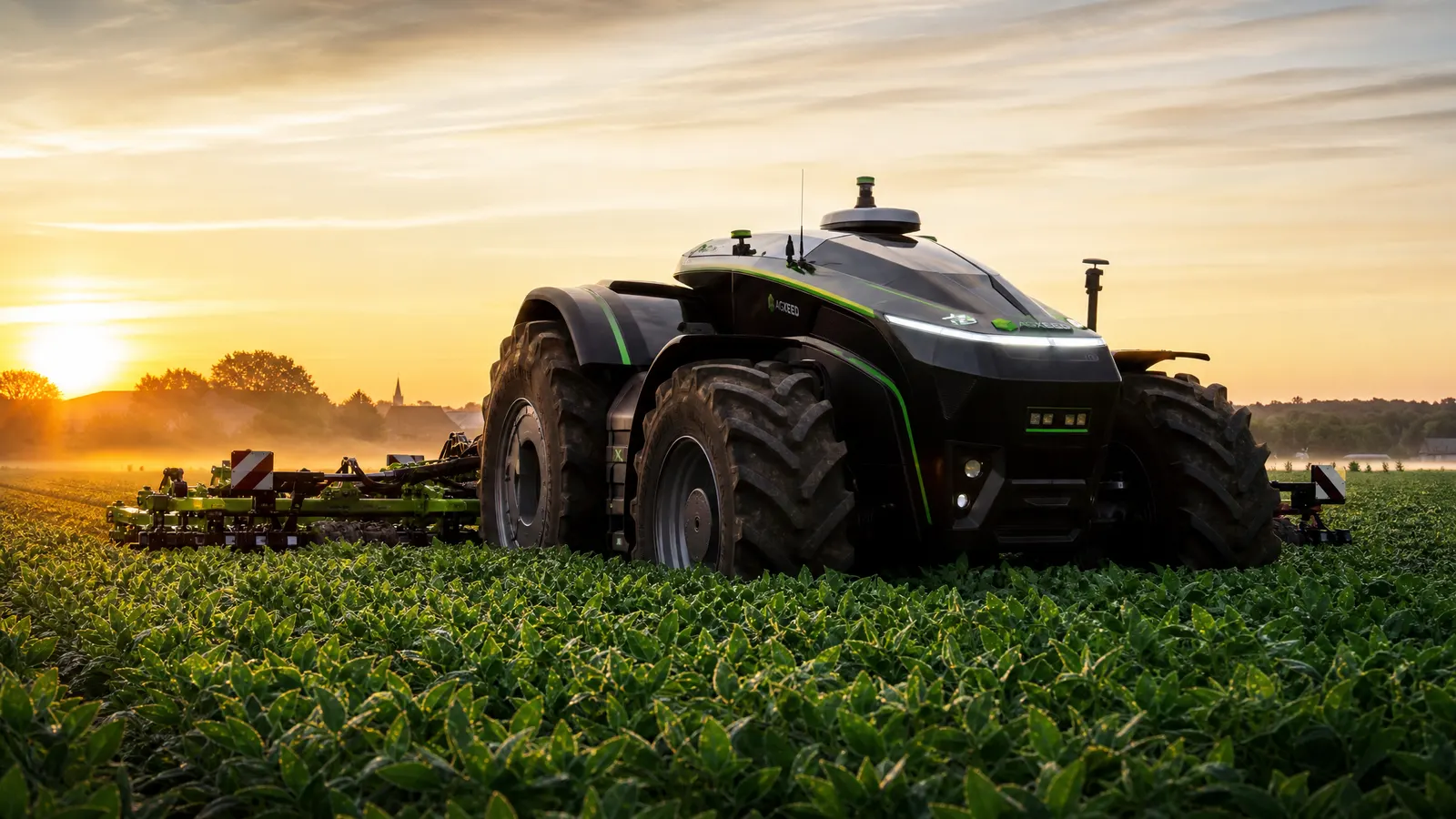
While humanoid robots and delivery drones often steal the headlines, one of the most significant robotics revolutions is happening quietly in the world's fields. Agricultural robotics, or "AgTech," is tackling fundamental challenges like labor shortages, climate change, and the need for greater food production. For investors and technologists, this sector represents a massive, underserved market where automation is not just a convenience—it's a necessity.
The quick answer: The agricultural robotics market is surging due to a perfect storm of labor scarcity, falling hardware costs, and the demand for sustainable, high-yield farming. Key technologies like autonomous tractors, AI-powered weeders, and crop-monitoring drones are moving from pilot programs to full-scale commercial deployment, creating a compelling investment landscape for 2026 and beyond.
Key Areas of Innovation
The AgTech robotics space is broad, but three categories are seeing the most traction and investment right now.
1. Autonomous Tractors and Harvesters
This is the heavyweight category. Companies are developing fully autonomous tractors that can plow, plant, and till fields 24/7 without a human operator. These aren't just retrofitted machines; they are ground-up robotics platforms equipped with sophisticated GPS, LiDAR, and computer vision. The goal is to increase precision and efficiency, reducing fuel consumption and soil compaction.
2. Smart Weeding and Spraying
Precision agriculture is the mantra here. Instead of broadcast-spraying entire fields with herbicides, intelligent robots use computer vision to identify individual weeds and apply a micro-dose of chemicals, or even remove them mechanically. This "see-and-spray" approach drastically cuts down on chemical usage, saving farmers money and benefiting the environment.
3. Drones and Data Collection
Agricultural drones are the eyes in the sky. Equipped with multispectral sensors, they can monitor crop health, soil moisture levels, and pest infestations with a level of detail impossible to achieve from the ground. This data allows for highly targeted interventions, optimizing irrigation and fertilizer application for maximum yield.
Companies to Watch in 2026
The AgTech landscape includes established giants and nimble startups. For a broader look at the robotics market, see our guide to investing in robot stocks.
Public Giants
- Deere & Company (DE): The undisputed leader. Their acquisition of Blue River Technology in 2017 for its "see-and-spray" tech was a landmark moment. With its massive dealer network and autonomous 8R tractor, John Deere is the blue-chip stock of the AgTech world.
- CNH Industrial (CNHI): Owner of the Case IH and New Holland brands. They are aggressively competing with Deere, particularly through their acquisition of Raven Industries, a leader in precision agriculture technology.
Key Startups (Private)
- Carbon Robotics: This Seattle-based startup is known for its Autonomous Weeder, which uses high-powered lasers to identify and eliminate weeds without disturbing the soil. It's a prime example of a non-chemical, high-tech solution.
- Monarch Tractor: Backed by CNH Industrial, Monarch is developing the world's first fully electric, driver-optional smart tractor. Their focus on sustainability and data collection makes them a critical player to watch.
- AEM (Advanced Farm Equipment): Specializing in robotic harvesting, particularly for delicate crops like strawberries, AEM is solving one of the most labor-intensive challenges in farming.
The Challenges Ahead
Despite the momentum, the industry faces hurdles. High upfront costs, a need for robust rural connectivity (5G), and the natural conservatism of the farming industry can slow adoption. Furthermore, the technology must prove its reliability and ROI in the harsh, unpredictable environment of a real-world farm.
For anyone diving deep into market reports and data, a clear, high-resolution monitor is essential. The Dell UltraSharp U2723QE is a popular choice for its color accuracy and sharp text, making long research sessions easier on the eyes.
How to Invest in the Trend
Directly investing in private startups is difficult for most, so public companies are the most accessible route.
- Pure-Play Giants: Investing in Deere (DE) or CNH Industrial (CNHI) is a direct bet on the leaders of the autonomous farming transition.
- Component Suppliers: Companies that supply the "brains" and "eyes" of these robots, like NVIDIA (NVDA) for processing and Trimble (TRMB) for precision GPS, offer a more diversified approach.
- ETFs: While there isn't a dedicated AgTech robotics ETF yet, funds focused on future of food or agriculture like the Global X AgTech & Food Innovation ETF (KROP) offer some exposure to this theme.
For more information on the agricultural technology landscape, the U.S. Department of Agriculture's technology page is an excellent, unbiased resource.
FAQ
Q: Are these robots going to replace all farm jobs?A: Not entirely. The goal is to augment human labor, not replace it. Robots will handle the most strenuous, repetitive tasks, allowing farmworkers to focus on higher-value activities. The nature of farm work will change, requiring more tech-savvy operators.
Q: How much does an autonomous tractor cost?A: A new, fully autonomous tractor can cost over $500,000. However, many companies are also offering retrofit kits for existing tractors and exploring a "Robotics-as-a-Service" (RaaS) model, where farmers pay per acre, lowering the barrier to entry.
Q: When will this technology become mainstream?A: For many applications, it already is. "See-and-spray" technology is being deployed on thousands of farms. Fully autonomous, driverless tractors are in the early stages of commercial rollout and are expected to become much more common in the next 2-3 years.
---
The shift to automated farming is not a question of if, but when. Driven by powerful economic and environmental forces, agricultural robotics is poised to become one of the most impactful and investable technology sectors of the next decade.