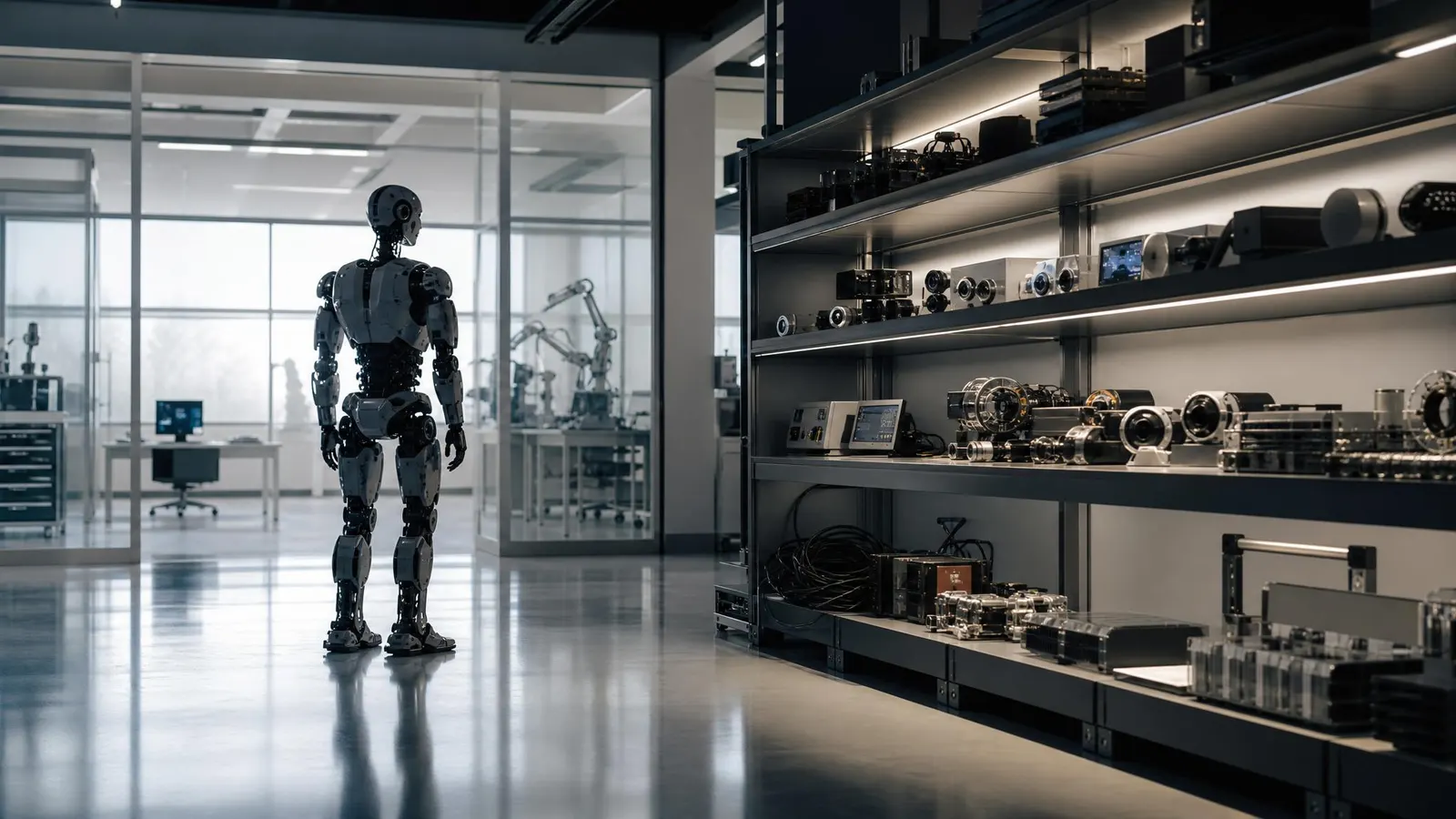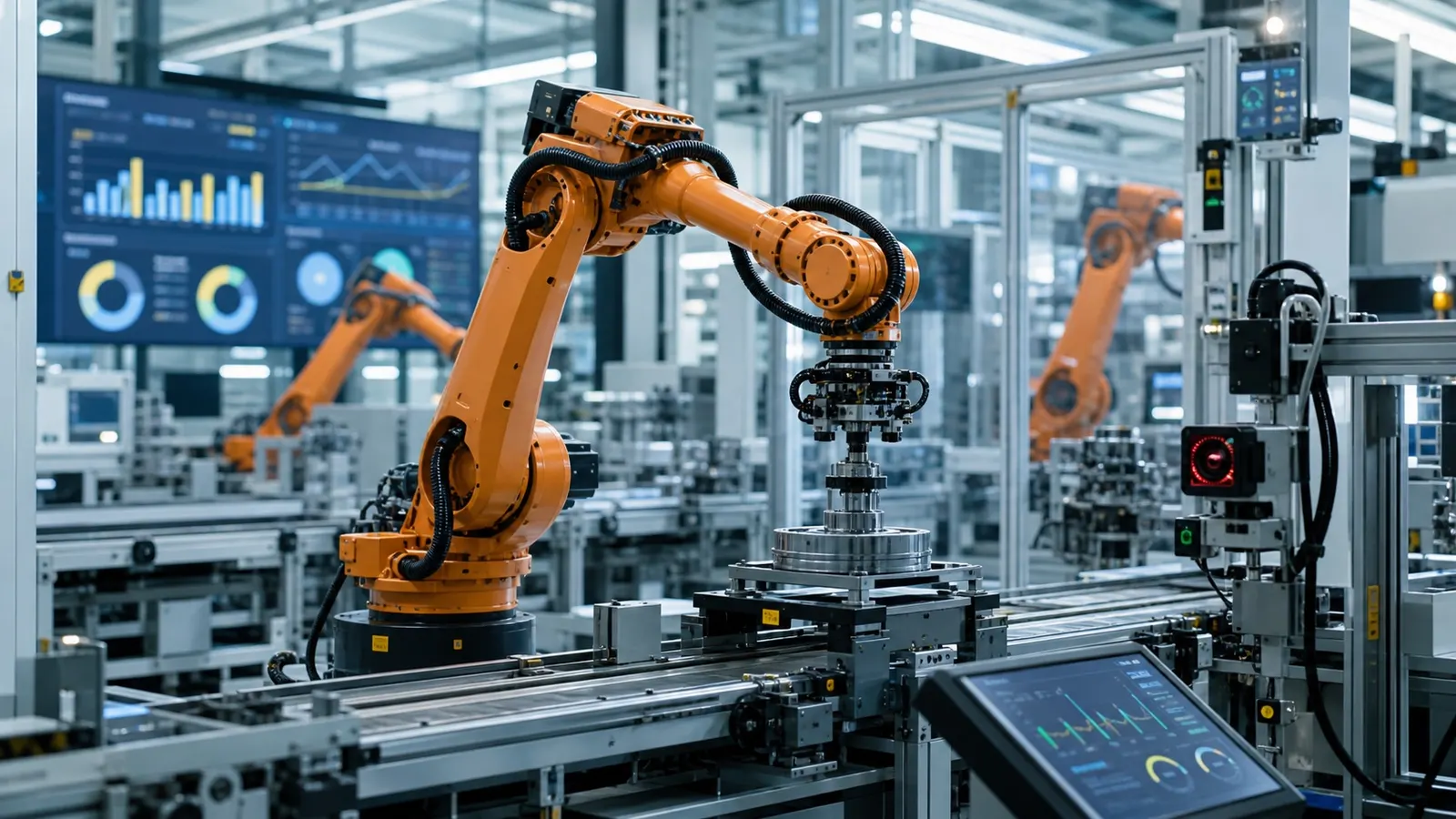
Humanoid robots moved from research project to production asset between 2024 and 2026. The gap between demo and deployment is closing — but the gap between headline and reality is wider than the press releases suggest.
This RoboBrief hub tracks the companies, milestone events, engineering realities, and investor signals that matter. Bookmark it as your living reference for the humanoid robot race in 2026.
---
The Fast Answer
Where are humanoid robots actually working right now?In 2026, commercial humanoid deployments are concentrated in three categories:
- Automotive manufacturing — Figure AI (BMW, Amazon), Agility Robotics Digit (Amazon), Tesla Optimus (Fremont/Tesla), UBTECH Walker S (EV factories in China).
- Warehouse and logistics — AMR-adjacent humanoids handling unstructured pick/place tasks that wheeled AMRs cannot manage.
- Factory showcases — AGIBot, Unitree, and other Chinese manufacturers operating in factory environments with continuous livestreams and progress demonstrations.
Outside these three zones, deployments are experimental pilots. The 88% household task failure rate documented in 2025-2026 research still applies to general-purpose home use.
---
Why 2026 Is the Inflection Year
Production ramp is real — and uneven
Figure AI crossed a milestone in June 2026 that few industrial companies hit: more robots operating than human employees. It is a production-ramp signal, not a labor-replacement signal. The company had ~250 employees and ~300+ deployed robots. The ratio matters because it means the company is shipping faster than it is hiring, which is the economics of a hardware product entering scale.
Tesla's Optimus is on a parallel trajectory. Taiwan's supply chain is already spinning up for Optimus component production — actuators, sensors, and structural parts are being sourced from the same Taiwanese OEMs that supply iPhone and EV component runs. That supply-chain activation is a more reliable signal than any Elon Musk timeline claim.
China is scaling at a price point the West cannot match
Unitree's R1 sells for $4,370 on AliExpress. That is less than a used car and within reach of a well-funded research lab, small manufacturer, or enthusiast institution. When China staged a humanoid half-marathon with nearly 100 robots racing simultaneously in Beijing, it was partly a technology demonstration and partly a manufacturing-scale statement.AGIBot extended that transparency further by livestreaming its humanoid robots operating inside a real production facility 24 hours a day. Whether or not the work is commercially meaningful, the continuous stream signals confidence in reliability — or at least in optics.
The US and China are running different races
The US-China-India humanoid robot race is not purely a hardware competition. The US advantage is in software, foundation models, and AI integration. Siemens and Nvidia partnered with physical AI companies to simulate factory environments before deploying humanoids into real ones, a workflow China has not yet matched. China's advantage is manufacturing capacity and cost. India is playing a software-defined long game.
---
Companies to Watch
US-Based
| Company | Robot | Status | Key Deployment |
|---|---|---|---|
| Figure AI | Figure 02 / 03 | Commercial | BMW, Amazon warehouses |
| Agility Robotics | Digit | Commercial | Amazon fulfillment |
| Tesla | Optimus | Production ramp | Tesla Fremont factory |
| Boston Dynamics | Atlas (electric) | R&D / commercial | Industrial pilots |
| Physical Intelligence | π0 / π07 | Research → commercial | General manipulation |
China-Based
| Company | Robot | Notable Feature |
|---|---|---|
| Unitree | H1, G1, R1 | Lowest price point globally |
| AGIBot | AgiBot X2 | Factory livestream, scale |
| UBTECH | Walker S | EV factory deployment |
| Agibot / Zhiyuan | Multiple | Chinese gov't-backed scale |
| RobotCom | R-Noid | Wheeled humanoid pivot for workplace use |
---
Engineering Reality Check
The demos are impressive. The engineering is brutal.
Texas Instruments' interview on humanoid robot power and sensing challenges is required reading for anyone evaluating timelines. The bottlenecks are not in AI software — they are in:- Actuators: torque density, back-drivability, and heat management at human-scale motion speed.
- Sensors: tactile feedback, proprioception accuracy, and sensor fusion under load.
- Power: current batteries give 1-3 hours of meaningful work; tethered power is common in factory settings.
- Safety certification: no clear regulatory path for autonomous humanoid operation near humans in most jurisdictions.
That last point is becoming its own platform layer. NVIDIA's Halos robotics safety stack is one of the clearest signals that physical AI companies now have to compete on auditable deployment, not just mobility demos or model capability.
The investors' reality check on humanoid robots in 2026 lays out why most valuation models are still based on 2028-2030 assumptions rather than current revenue.
---
Where Humanoids Are Actually Deployed in 2026
The most reliable deployment data comes from corporate announcements, supply chain signals, and industry analyst visits — not from promotional videos.
Automotive / Manufacturing
- Figure AI robots in BMW Spartanburg (material handling, not welding)
- Agility Digit in Amazon Fulfillment Centers (tote handling)
- Tesla Optimus at Fremont (parts retrieval, limited production-floor tasks)
- UBTECH Walker S in Chinese EV factories (assembly assist)
Warehousing and Logistics
- Skild AI acquired Fetch Robotics, adding AMR base to its humanoid/manipulation stack. This hybrid strategy — wheeled base + arm — is competing directly with biped humanoids for unstructured warehouse tasks.
- Warehouse automation companies to watch in 2026 covers the full competitive map, including which companies are humanoid-first versus mobile manipulation first.
Pilot / R&D
- Hospital logistics (Japan, limited US pilots)
- Construction site surveying (not manipulation)
- Retail restocking (intermittent, mostly cobot-class systems)
---
Investor Signals: What to Track
If you're following humanoid robotics as an investment category, the signals that matter most in 2026 are:
- Production unit counts — not press-release robots, but third-party-verified deployment counts or supply chain orders.
- Customer renewals and expansions — did BMW order more Figure robots after year one?
- Actuator and sensor supply chain — who is supplying the key components and at what volume?
- Foundation model adoption — is Physical Intelligence, Nvidia's Isaac Lab, or an open-source equivalent running on third-party hardware?
- Regulatory milestones — any ISO or OSHA guidance on autonomous humanoid operation near workers.
For the investment layer, see:
- Humanoid robots 2026: investor reality check
- Robotics ETFs vs individual stocks in 2026
- AI and robotics investment trends 2026
---
Related Deep Dives
Hardware and engineering:- Beyond the demo: the hidden engineering powering humanoid robots
- Reality check: 88% household task failure rate — what it means
- Unitree's R1: the $4,370 humanoid you can buy on AliExpress
- Figure AI: more robots than humans — what the milestone means
- Tesla Optimus: Taiwan's supply chain is already spinning up
- AGIBot: livestreaming humanoid robots in a real factory
- Siemens and Nvidia: physical AI factories
- RobotCom's R-Noid: the wheeled humanoid workplace pivot
- Physical Intelligence's π07: the general-purpose robot brain
- Robot foundation models: what they are and why they matter
- NVIDIA Halos: why safety is becoming the next physical AI battleground
- The physical AI data-moat tracker: who owns the data
- The humanoid robot race: US, China, and India
- Beijing's humanoid half-marathon: what nearly 100 racing robots mean
- China's 15th five-year plan and robotics AI strategy
- Warehouse automation companies to watch in 2026
- Skild AI acquires Fetch Robotics: warehouse revolution
---
FAQ
Are humanoid robots available to buy in 2026?
Yes, at the research/industrial tier. Unitree's R1 ships via AliExpress for $4,370. Boston Dynamics and Figure AI sell commercially but require enterprise agreements. No mainstream consumer humanoid robot is available at a household price point as of mid-2026.
Which humanoid robot is most commercially deployed?
By deployment count, Agility Robotics' Digit (Amazon) and Figure AI's robots (BMW, Amazon) are the most commercially active in the US. In China, AGIBot and UBTECH have the largest disclosed factory deployments.
Is Tesla Optimus real?
Yes. Optimus units are operating inside Tesla's Fremont factory. The mass-production ramp depends on Taiwan's supply chain partners, which are actively mobilizing. The open question is unit economics and task reliability at production speed, not whether the robot exists.
What is "physical AI"?
Physical AI refers to AI systems that reason about and act in the physical world — as opposed to language models that only process text or images. Humanoid robots running foundation models trained on physical-world data (manipulation, locomotion, environment sensing) are the current frontier of physical AI.
Should I invest in humanoid robotics stocks now?
The 2026 opportunity is real but early. Most humanoid companies are private. Public-market exposure comes through ETFs (ROBO, ARKQ, BOTZ) or component suppliers (actuator, sensor, and semiconductor companies). See the robotics investing guide for the full framework.
---
This page is updated as new milestones are confirmed. Check the RoboBrief blog for the latest dispatches on humanoid robots and physical AI.